

As of January 1, 2026, the statutory minimum wage in Germany has officially increased to €13.90 gross per hour. This adjustment marks the first step in a two-stage increase scheduled for the coming years. The Federal Government has implemented this change following recommendations from the Minimum Wage Commission, impacting the earnings of millions of workers across the country.
The increase is designed to bolster purchasing power and stabilize domestic demand amidst a complex economic landscape. Alongside the hourly wage hike, the earnings limits for marginal employment, commonly known as Minijobs, have also been adjusted upward to reflect the new pay rates.
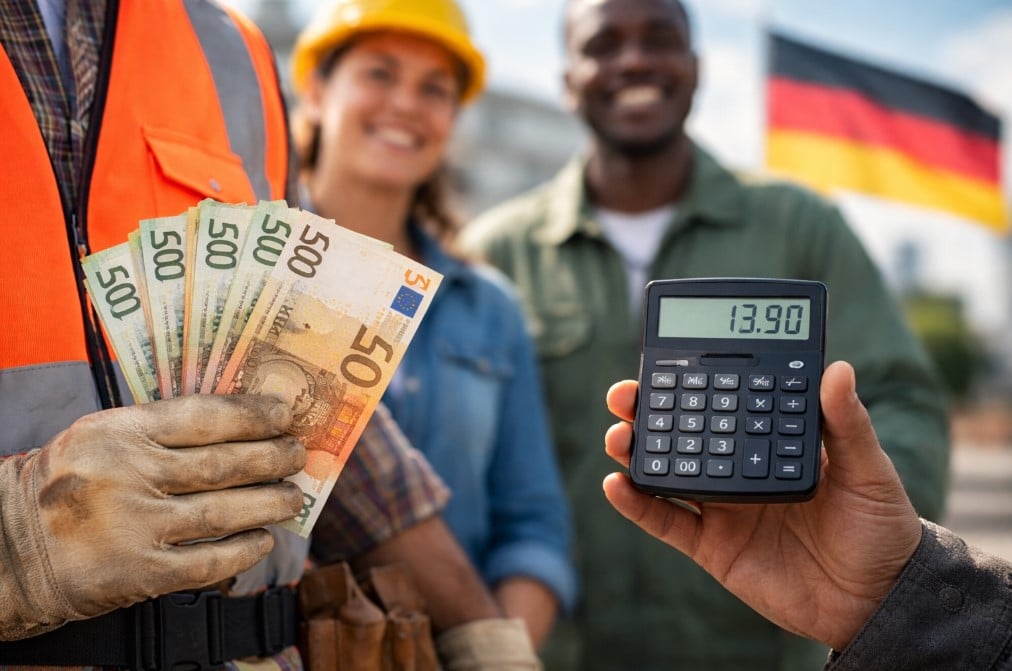
Two-Stage Increase Plan for 2026 and 2027
The rise to €13.90 is not the final adjustment in the current legislative cycle. A second increase is already scheduled to take effect one year later. On January 1, 2027, the mandatory lower wage limit will climb further to €14.60 per hour. When combined, these adjustments represent a total increase of 13.88 percent over the two-year period.
This significant rise aims to support low-income earners, helping them cope with the cost of living. According to government data, more than six million people in Germany will benefit directly from these adjustments. These are individuals who previously earned less than the new threshold. The policy is also expected to have a positive impact on gender pay equity, as women are statistically overrepresented in the low-wage sector.
Adjustments to Minijob and Midijob Limits
The increase in the hourly minimum wage triggers an automatic adjustment to the earnings limit for Minijobs. This dynamic link ensures that Minijobbers can continue to work up to ten hours a week without exceeding the threshold for marginal employment.
New Thresholds for Marginal Employment
Effective January 1, 2026, the monthly earnings limit for Minijobs has risen to €603. Previously, in 2025, the limit stood at an annual average of €556 per month. Looking ahead, this limit is set to increase again to €633 per month in 2027, coinciding with the next wage hike.
This mechanism prevents a situation where a higher hourly wage would force Minijobbers to reduce their working hours to stay within the tax-exempt limit. For many households, these earnings are essential for maintaining financial stability and managing their overall credit in Germany.
Changes to the Midijob Transition Area
The „Midijob“ sector, which covers employment with earnings slightly above the Minijob threshold, has also seen adjustments. As of 2026, the transition area applies to monthly earnings between €603.01 and €2,000.
Employees falling within this bracket benefit from reduced social security contributions. The contributions rise gradually as earnings approach the €2,000 upper limit, ensuring there is no abrupt „fiscal cliff“ when moving from marginal to regular employment. This sliding scale is designed to make taking on additional work more attractive for employees. Stable income in this bracket is often a prerequisite for accessing various financial services, such as a car loan in Germany, which may be necessary for commuting to work.
Economic Impact and Commission Recommendations
The decision to raise the wage floor stems from a proposal submitted by the independent Minimum Wage Commission in June 2025. This body is composed of a chairperson, three representatives from trade unions, three from employer associations, and two advisory members from the scientific community.
Balancing Protection and Competition
The Commission’s mandate involves a complex balancing act. They must determine a wage level that provides appropriate minimum protection for workers while ensuring fair competition and not endangering employment levels. In their 2025 assessment, the Commission concluded that businesses had successfully adapted to previous wage hikes.
The Federal Government has expressed confidence that the current increase will not lead to negative labor market outcomes. Despite global economic challenges, officials do not expect a rise in unemployment. The phased approach, spreading the increase over two years, is intended to give employers time to adjust their cost structures.
The recommendation also aligns with broader European Union guidelines. The Commission orients its decisions toward the development of collective bargaining wages in Germany and the EU reference value, which targets a minimum wage equivalent to 60 percent of the median wage of full-time employees.
Context and Exceptions
Germany introduced the general statutory minimum wage in 2015 to establish a baseline for fair pay. While the regulation applies to the vast majority of employees in the country, there are specific exceptions.
The statutory minimum wage does not apply to:
- Apprentices and trainees.
- Volunteers and honorary workers.
- Certain long-term unemployed individuals during their first six months of reintegration into the workforce.
- Self-employed individuals.
For the self-employed, who operate outside this safety net, financial planning requires different strategies, particularly when seeking capital. For instance, securing a business loan in Germany often involves different criteria than those applied to salaried employees protected by minimum wage laws.
Verification and Compliance
The Federal Ministry of Labor and Social Affairs provides tools for workers to verify their pay. A minimum wage calculator is available to help employees determine how the new €13.90 rate affects their gross salary. Compliance is monitored by customs authorities (Zoll), specifically the unit responsible for financial control of undeclared work.
For workers aiming to build long-term assets, such as purchasing a home, a steady and rising income trajectory is vital. While the minimum wage provides a floor, consistent employment history remains a key factor for banks approving a mortgage loan.
The next evaluation by the Minimum Wage Commission is expected to take place in two years, following the established cycle of reviewing and recommending adjustments to the wage floor.